Signs of Dangerous Electrical Wiring in Your Home
A flickering bulb is easy to ignore. A warm socket feels like something you'll "deal with later." But these small annoyances are often the first signs of bad electrical wiring in a home, and by the time the problem announces itself loudly, it usually means smoke, sparks, or a damaged appliance. Knowing the early faulty wiring symptoms can save you money, protect your appliances, and in the worst cases, save your life.
This matters even more in Nigerian homes, where the wiring story is rarely simple. You're not just dealing with old cables behind a wall. You're dealing with grid power that swings between barely-there current and dangerous surges, a generator and inverter system patched into the same circuits, and a market flooded with substandard cables and switches. Add concrete walls, rainy season dampness, and surface conduits that have been baking in the sun for a decade, and you get a wiring system under more daily stress than most international wiring guides ever account for.
This guide walks through how to tell if house wiring is bad, what each warning sign actually means, and which ones demand you cut power and call an electrician immediately rather than waiting until morning.
Why Wiring Problems in Nigerian Homes Are Different
Most wiring safety content assumes a stable grid, drywall construction, and a single power source. None of that fits the typical Nigerian household.
Here, power often comes from at least two sources, grid and generator, sometimes three if there's an inverter or solar setup involved. Every changeover between these sources puts mechanical and electrical stress on switches and connections that weren't always installed to handle it. Add to that a grid known for unpredictable voltage, where your supply might be a weak trickle one hour and a damaging surge the next, and you have a wiring system that's working harder than it was designed to.
Then there's the construction itself. Most homes are built with sandcrete blocks and concrete, so wiring typically runs through surface conduits or is embedded directly in the wall rather than hidden behind drywall like in many Western homes. This changes how faults present themselves. A loose connection inside a wall here doesn't just spark behind a panel, it can make the wall itself carry current. Dampness from rain or plumbing leaks seeping into a conduit becomes a real shock hazard, not just a theoretical one.
Finally, there's the materials problem. A wave of substandard and outright counterfeit cables, sockets, and circuit breakers has made it into local markets over the years. Wire gauges are sometimes mislabeled, insulation degrades faster than it should, and some breakers fail to trip even under genuine overload conditions. This means relying purely on "the breaker would trip if something was wrong" is not a safe assumption in many Nigerian homes.
With that context in mind, here are the signs that actually matter.
1. Flickering or Dimming Lights
Flickering lights in a house are one of the most common complaints, and also one of the most misread. People often blame "NEPA" and move on. Sometimes that's fair. But flickering that happens only on certain switches, or that gets worse when you turn on a heavy appliance like an iron or a pumping machine, points to something inside your own wiring rather than the grid.
A loose connection at the socket, switch, or distribution board causes intermittent contact, and intermittent contact causes flicker. Over time, that loose connection heats up, and heat degrades insulation. What starts as a flicker can become a scorch mark behind a switch plate within months.
Why Is My Light Dim But My Neighbor's Light Is Bright?
This is a specific complaint worth its own section, because it confuses a lot of people. If your neighbor's flat on the same line has strong, steady light while yours is dim and your appliances are humming or running sluggishly, the issue usually isn't the grid itself. It's almost always one of these:
A dropped or weakened neutral connection somewhere between the main supply and your meter, which causes voltage imbalance even though the live wire is delivering current.
A compromised joint at your service entry, often from corrosion, a loose lug, or a connection that was never properly crimped.
Undersized cabling feeding your unit specifically, common in older buildings or additions that were wired without upgrading the main feed.
This is one of the clearer signs of poor neutral connection, and it's not something to wait out. A bad neutral can cause voltage spikes severe enough to fry televisions, fridges, and air conditioners in a single event, because some appliances end up receiving far more voltage than they're rated for while others get starved. If you notice this pattern, especially alongside humming appliances or bulbs that suddenly flare brighter for a second, get an electrician to check the neutral line before it takes out your appliances.
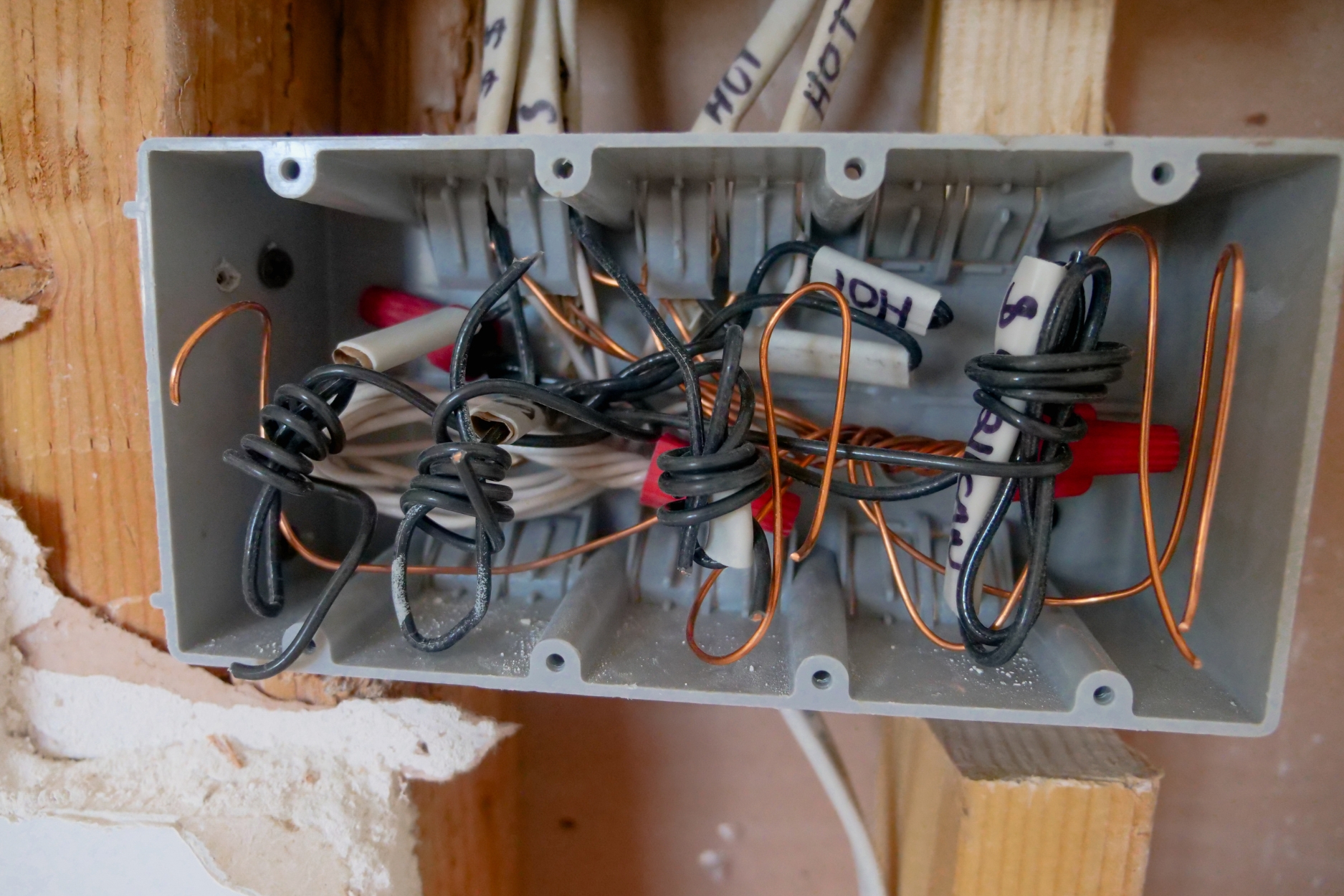
2. Sockets and Switches Warm to the Touch
A socket or switch that feels warm when you touch it is never normal, no matter how minor it seems. Current flowing through a properly sized, properly connected circuit doesn't generate noticeable heat at the point of contact. Warmth means resistance, and resistance in an electrical path means energy is being lost as heat instead of being delivered to your appliance.
This is usually caused by one of three things: a loose terminal screw inside the socket, a wire that was never fully twisted into the connector during installation, or a socket overloaded beyond what it was built to carry. Pay close attention to sockets feeding heavy appliances like deep freezers, washing machines, microwaves, or air conditioning units, since these draw more current and expose weak connections faster than a socket powering a phone charger.
If a socket feels warm, stop using it immediately and have it inspected. Don't just switch to a different socket on the same circuit and assume the problem is isolated. Heat at one point often signals a wiring issue affecting the whole circuit run.
3. Burning Smell From a Socket or Switch
A burning smell from a socket is one of the clearest dangerous electrical wiring signs there is, and it should never be dismissed as "small thing." That smell is the scent of insulation, plastic, or wood charring from heat buildup, which means a fault has already progressed past the early warning stage.
Common causes include overloaded sockets, especially extension boxes carrying multiple high-draw appliances at once, deteriorated insulation on old cables, or a short circuit that's generating localized heat without yet tripping the breaker. In homes using surface conduits, a burning smell can also indicate that wiring inside the conduit has chafed against a sharp edge over time, slowly wearing through the insulation.
If you smell burning anywhere near a socket, switch, or your distribution board, cut power to that circuit immediately at the DB, unplug everything connected to it, and don't restore power until it's been checked. This is not a sign to investigate yourself unless you're trained to do so safely.
4. Circuit Breaker or Fuse Keeps Tripping
A circuit breaker keeps tripping for a reason, even if that reason isn't obvious at first. The breaker is doing its job, cutting power before a fault becomes a fire. The mistake people make is resetting it repeatedly without figuring out why it tripped in the first place.
Frequent tripping usually comes down to one of these:
Overloading, where too many appliances are drawing current through one circuit at once, common with extension boxes feeding several heavy devices.
A short circuit, where live and neutral wires are making unintended contact, often due to damaged insulation.
A ground fault, where current is leaking to an unintended path, sometimes through dampness or a compromised connection.
An aging or faulty breaker itself, which is more common with substandard breakers that wear out faster than properly rated ones.
If you're still using an older fuse box rather than a modern distribution board with circuit breakers, a fuse that blows repeatedly is sending the exact same message. Don't respond by fitting a higher-rated fuse wire to "stop it from blowing." That defeats the entire safety purpose of the fuse and turns a protective device into a fire risk.
5. Inverter Tripping the Circuit Breaker or Sparking at the Changeover Switch
This is one of the most distinctly Nigerian wiring problems, and one that international guides almost never cover. If your inverter trips your circuit breaker, or you notice sparking from the changeover switch when shifting between grid, generator, or inverter power, you're looking at a wiring issue specific to multi-source power setups.
A few things typically cause this. The changeover switch may have loose or corroded contacts, which create resistance and visible sparking during the switch. The inverter's load might exceed what the circuit or the changeover switch was rated to carry, especially in homes where more appliances have been added to the inverter circuit over time without re-evaluating capacity. There's also the possibility of incompatible wiring between the inverter installation and the existing house wiring, which happens often when inverter systems are added by a different technician than the one who did the original house wiring, with no real coordination between the two jobs.
Sparking at a changeover switch is not cosmetic. It indicates arcing, which generates intense, localized heat capable of igniting nearby materials. Have this checked promptly, and resist the urge to keep using a changeover switch that sparks "because it still works."
6. Buzzing Sound From an Outlet or Switch
Electrical current moving through a sound, well-connected circuit is silent. A buzzing sound from an outlet or switch means something is vibrating or arcing internally, almost always due to a loose connection. The buzz is the sound of electricity jumping a small gap rather than flowing through a solid contact point.
This is closely related to the warm-socket problem, since the same loose connection that causes heat often causes vibration and noise. If you hear buzzing, treat it with the same urgency as warmth or a burning smell. It's an active fault, not background noise to tune out.
7. Sparking Outlets, Switches, or Extension Boxes
Visible sparking is the wiring system's last warning before something fails outright. Common sparking outlets reasons include a worn-out socket where the metal contacts have degraded, a loose plug that isn't seating fully into the socket, exposed or frayed wiring inside the socket housing, or moisture inside the socket from a damp wall or recent cleaning.
A single small spark when plugging something in can sometimes be normal, a brief static discharge as contact is made. But repeated sparking, sparking that happens without anything being plugged or unplugged, or sparking accompanied by a smell or sound, is not normal under any circumstance. Disconnect the circuit and have the socket replaced.
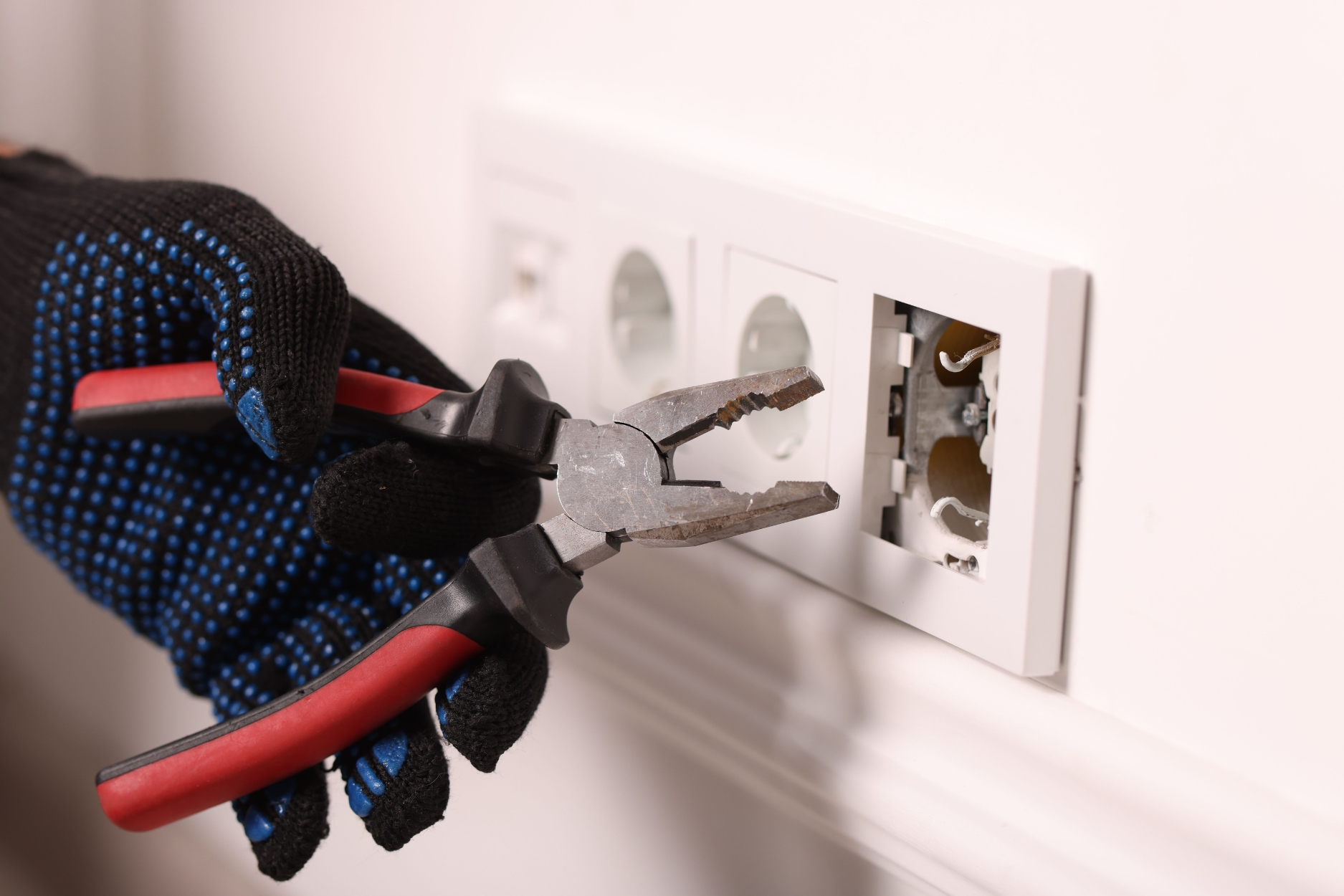
8. Exploding or Melting Extension Boxes
This deserves its own section because it's one of the most common and most preventable hazards in Nigerian homes. Extension boxes get treated as all-purpose power strips, often carrying a deep freezer, a pumping machine, and a boiling ring on a single extension never designed for that combined load.
Dangers of Overloading Extensions
Every extension box has a maximum current rating, and exceeding it generates heat inside the cable and the box itself. Over time, that heat degrades the plastic housing and the wire insulation, eventually leading to melting, and in serious cases, the box catching fire or exploding from internal pressure buildup. High-draw appliances like air conditioners, freezers, electric kettles, and water heaters should ideally be plugged directly into a wall socket on a dedicated circuit, not run through a shared extension with other devices.
How to Spot Fake Electrical Wires and Components
The substandard materials problem makes this risk worse than it should be. A few practical ways to spot questionable wiring and accessories before they end up in your home:
Check the insulation thickness. Genuine cables have consistent, slightly thick insulation. Substandard cables often feel unusually thin or flimsy for their stated gauge.
Look for proper labeling. Reputable cable brands print clear, consistent markings along the cable length. Faded, smudged, or missing print is a red flag.
Test the copper, where possible. Genuine copper conductors are a bright, uniform orange-red. Some counterfeit cables use copper-coated aluminum, which is a poor substitute and a fire risk under load.
Buy from established suppliers, not roadside vendors with unusually low prices on cable, sockets, or breakers. If a breaker is priced far below the market rate for its rating, it likely won't perform to that rating either.
9. Tingling or Electric Shock From Walls or Taps
If touching a bare concrete wall, a metal pipe, or a tap gives you a slight tingling sensation, this is one of the more serious dangerous electrical wiring signs and should be treated as an emergency, not a curiosity.
Why Is My Wall Giving Me Electric Shock?
In homes with concrete construction, wiring is frequently run through conduits embedded in or attached to the walls. If insulation on a wire inside that conduit is damaged, perhaps from age, from a nail or screw driven into the wall without checking for wiring behind it, or from dampness caused by rain seepage or a plumbing leak, current can find its way to the wall surface, metal fittings, or plumbing connected to the building's earth.
This is especially dangerous because water conducts electricity efficiently, and bathrooms, kitchens, and exterior walls exposed to rain are the most common locations for this fault. A tingling sensation might feel minor, but it means a hazardous voltage is present somewhere it absolutely should not be. Someone standing in a wet area, or a child touching that same surface, could receive a far more severe shock than what you felt.
If you experience this, avoid the area, do not touch the wall or fitting again, and get an electrician to trace the fault before anyone else makes contact with it.
High Voltage and Low Current: Reading Grid Signals Correctly
Grid instability is a daily reality, but it's worth understanding when a power issue is a grid problem versus a wiring problem inside your own home.
High voltage destroying appliances is a well-known frustration, where a surge from the grid pushes voltage well above the standard supply, frying televisions, fridges, and electronics in seconds. This is often a transmission-level issue, but your home's wiring and protection setup determines how much damage it does to you specifically. A functioning automatic voltage switch or stabilizer can disconnect your home's circuit the moment voltage spikes beyond a safe range, protecting your appliances even when the grid itself is unstable.
Low current in house situations, where lights glow dim and appliances struggle to start, can also originate from the grid. But if this happens consistently while other nearby homes on the same transformer have normal power, the fault is more likely local, pointing back to the neutral connection issue covered earlier, or to undersized wiring somewhere on your own supply line.
The practical takeaway: if a power issue affects your entire street or estate, it's likely a grid problem to report to your distribution company. If it isolates to your home while neighbors are fine, it's a wiring problem, and one worth investigating before it costs you a fridge or air conditioner.
Aluminum Wiring Dangers and Old House Electrical Problems
Older homes, particularly those wired decades ago or extended without updating the original electrical plan, carry their own set of risks. Aluminum wiring, once used as a cheaper alternative to copper, expands and contracts more than copper does with heat cycles. Over years of use, this causes connections at sockets and switches to loosen gradually, even without anyone touching them, leading to the exact heat and arcing problems described earlier in this guide.
Old house electrical problems also tend to compound over time. A wiring system designed decades ago for a handful of bulbs and a radio is now being asked to run multiple air conditioners, a deep freezer, several phone chargers, a microwave, and a home theater system, often with circuits and breakers that were never upgraded to match. If your home falls into this category and you're seeing several of the warning signs above at once, rather than just one isolated issue, it's a strong signal that the entire wiring system needs evaluation rather than a single repair.
When to Call an Electrician for Wiring Issues
Some signs call for an inspection scheduled in the coming days. Others call for cutting power right now and getting someone out immediately. Here's how to tell the difference.
Call immediately and cut power to the affected circuit if you notice:
Any burning smell, regardless of how faint
Visible sparking from a socket, switch, or changeover
A wall, pipe, or tap giving you a shock or tingling sensation
Smoke from any electrical fitting
A socket or switch that's hot, not just warm, to the touch
Schedule an inspection soon if you notice:
Persistent flickering on specific circuits
A breaker or fuse that trips repeatedly under normal load
Buzzing sounds from outlets or switches
Dimmer lighting compared to neighboring units on the same supply
Inverter tripping issues at the changeover switch
In either case, resist the temptation to fix it yourself unless you're a trained electrician. Wiring faults are rarely isolated to the single point where they show symptoms, and a DIY fix that addresses the visible problem without finding the underlying cause often just delays the same fault from showing up somewhere else, sometimes worse.
How to Check Home Wiring Safety Yourself
While a full inspection should be left to a professional, there are a few checks any homeowner can safely carry out:
1. Touch test, carefully. With dry hands, briefly touch sockets and switch plates during normal use. Warmth is a red flag.
2. Listen during use. Pay attention to any buzzing or crackling when appliances are running, particularly heavy ones.
3. Smell check after heavy use. After running an air conditioner, iron, or freezer for an extended period, check nearby sockets for any smell.
4. Inspect visible cables. Look at exposed conduit runs and extension cables for cracking, discoloration, or exposed wire.
5. Track patterns. Note which specific sockets or circuits cause breaker trips, rather than just resetting and moving on.
None of these replace a proper inspection with the right testing equipment, but they help you catch problems early enough to call for help before a small fault becomes an expensive one.
Cost to Rewire a House and When It's Worth It
Full rewiring is a significant cost, and the price varies depending on the size of the home, whether wiring is being run through new conduit or existing ones, and the quality of cable and accessories used. As a rough guide, expect costs to scale with the number of rooms, sockets, and switches involved, plus the labor required, since rewiring an occupied home with concrete walls takes considerably more work than wiring a building during construction.
That said, rewiring isn't always necessary. Many wiring problems can be resolved by addressing specific faulty sections, replacing a deteriorated changeover switch, or upgrading an undersized distribution board, without redoing the entire house. A proper inspection will tell you whether you're dealing with a localized issue or a system-wide one, and that distinction matters significantly for your budget. Spending on diagnosis upfront almost always costs less than either an unnecessary full rewire or, worse, the damage from a fire that proper wiring would have prevented.
How Wakafixam Makes It Easier to Find Trusted Electricians and Artisans
Knowing the warning signs is only half the job. The other half is getting someone qualified to fix the problem, which can be its own challenge when you're not sure who to trust with wiring inside your walls.
Wakafixam connects you with electricians and other artisans across multiple service categories, so you're not relying on a single recommendation or a number scribbled on a flyer. You can compare available options based on what each professional offers, check user ratings and reviews from people who've actually used their services, and communicate directly before committing to a hire. That means fewer surprises, less guesswork, and a more informed decision when it comes to something as important as the wiring running through your home.
Final Thoughts
Electrical wiring problems rarely announce themselves clearly. They show up as a flicker, a smell, a sound you half-notice and explain away. But in a home running on grid power, generator backup, and an inverter system, with surface conduits and a market full of inconsistent materials, those small signs carry more weight than they would elsewhere. Catching them early, understanding what they actually mean, and bringing in a qualified electrician before the problem escalates is the difference between a minor repair and a major loss.
If something on this list sounds familiar, don't wait for it to get worse. Get it checked.