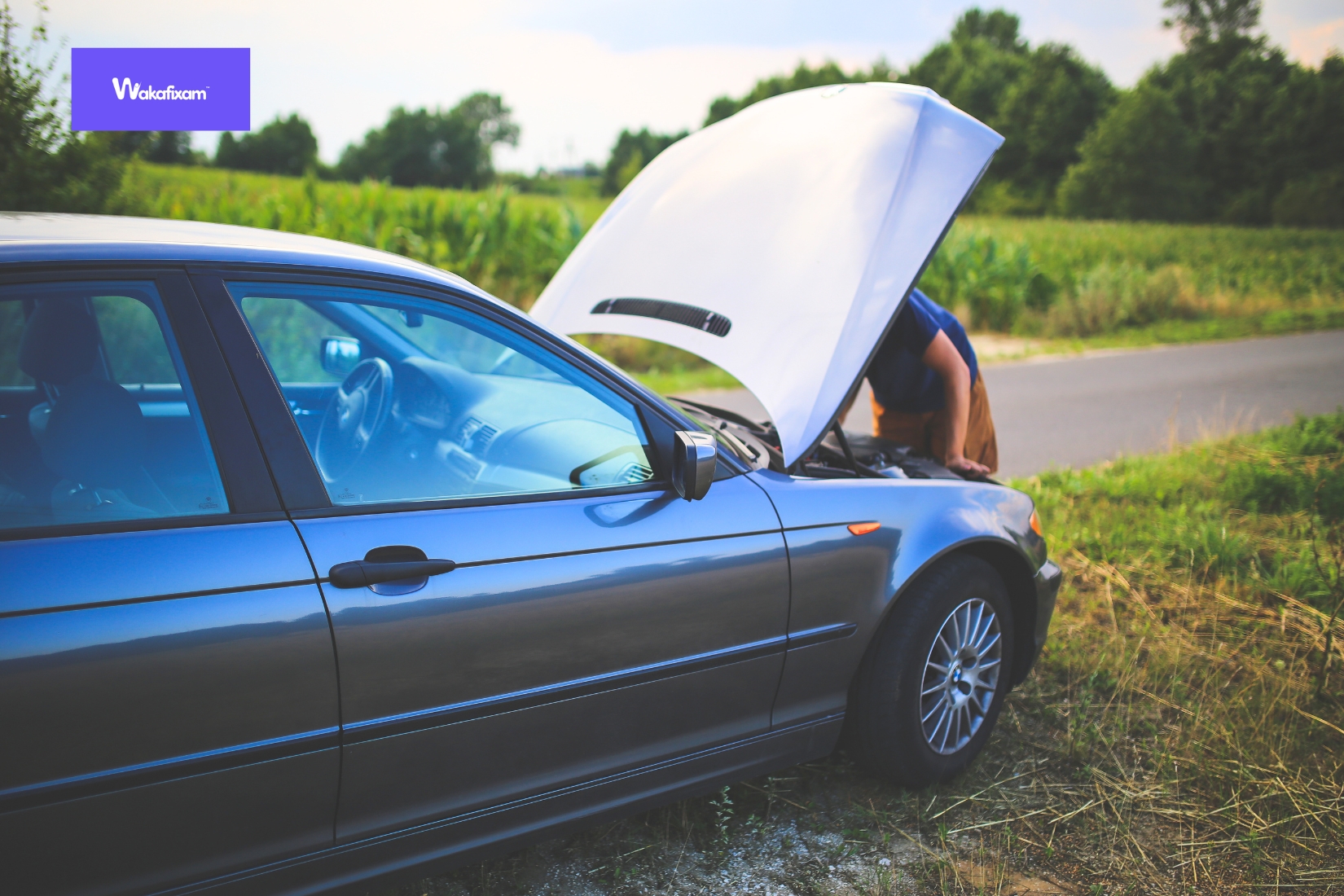
7 Things to Do If Your Car Breaks Down on the Road
Vehicles like other electronics does not care about your schedule. It does not matter if you are running late for a meeting in Victoria Island, driving back from a wedding in Benin, or in the middle of Third Mainland Bridge. When a car decides to stop working, it stops working.
What makes the difference in those moments is not how new the car is or when last you serviced it, it's whether you know what to do next. A lot of drivers do not. The initial instinct to either panic or start making random calls. A broken down vehicle in traffic while the driver figures things out is a safety risk for everyone on that road, not just the person behind the wheel.
Knowing the right steps ahead of time removes most of that uncertainty. The steps below covers exactly what to do, from the moment something goes wrong to the point where qualified help is on the way.
1. Stay Calm and Think Before You Act
The first instinct for most people is either to freeze or to jump out of the car immediately. Both are worth resisting.
A vehicle breakdown is stressful. If you are running late, carrying passengers, or stranded somewhere unfamiliar, the pressure multiplies fast. But the decisions you make in the first sixty seconds tend to shape everything that follows. Taking a breath, assessing your surroundings, and thinking through your next move before doing anything is not wasted time.
Ask yourself a few quick questions. Can the car still move, even slowly? Where are you exactly? Is traffic heavy? Is it raining or dark? Is there a safer spot nearby? Those answers will guide your next steps and help you communicate clearly when you eventually call for help.
2. Move the Vehicle to a Safe Position If You Can
A stationary car in the middle of traffic is a hazard to everyone around it. If the engine is still running or the car can coast, use whatever movement you have left to get off the road.
Look for the nearest shoulder, service lane, or roadside clearing. On expressways, the emergency lane is your target. On regular roads, even pulling halfway onto a verge or off a junction puts meaningful distance between you and oncoming vehicles. The goal is to stop somewhere that does not force other drivers to swerve around you without warning.
Once you are positioned, engage the handbrake. Do not leave the car in neutral on any incline, no matter how gentle the slope looks. After you have parked, keep your foot off the brake pedal; it releases the brake lights and can confuse drivers approaching from behind.
If the car cannot move at all, stay inside with your seatbelt on until it is safe to exit, especially on high-speed roads. That extra layer of protection matters if another vehicle approaches too fast.
3. Make Yourself Visible to Other Drivers
Once the vehicle is as safely positioned as you can manage, the next priority is visibility. Other drivers need to know something is wrong ahead of them, and they need that information early enough to react.
Switch on your hazard lights the moment the problem begins, not after you have parked. Hazard lights give approaching traffic advance notice while you are still manoeuvring.
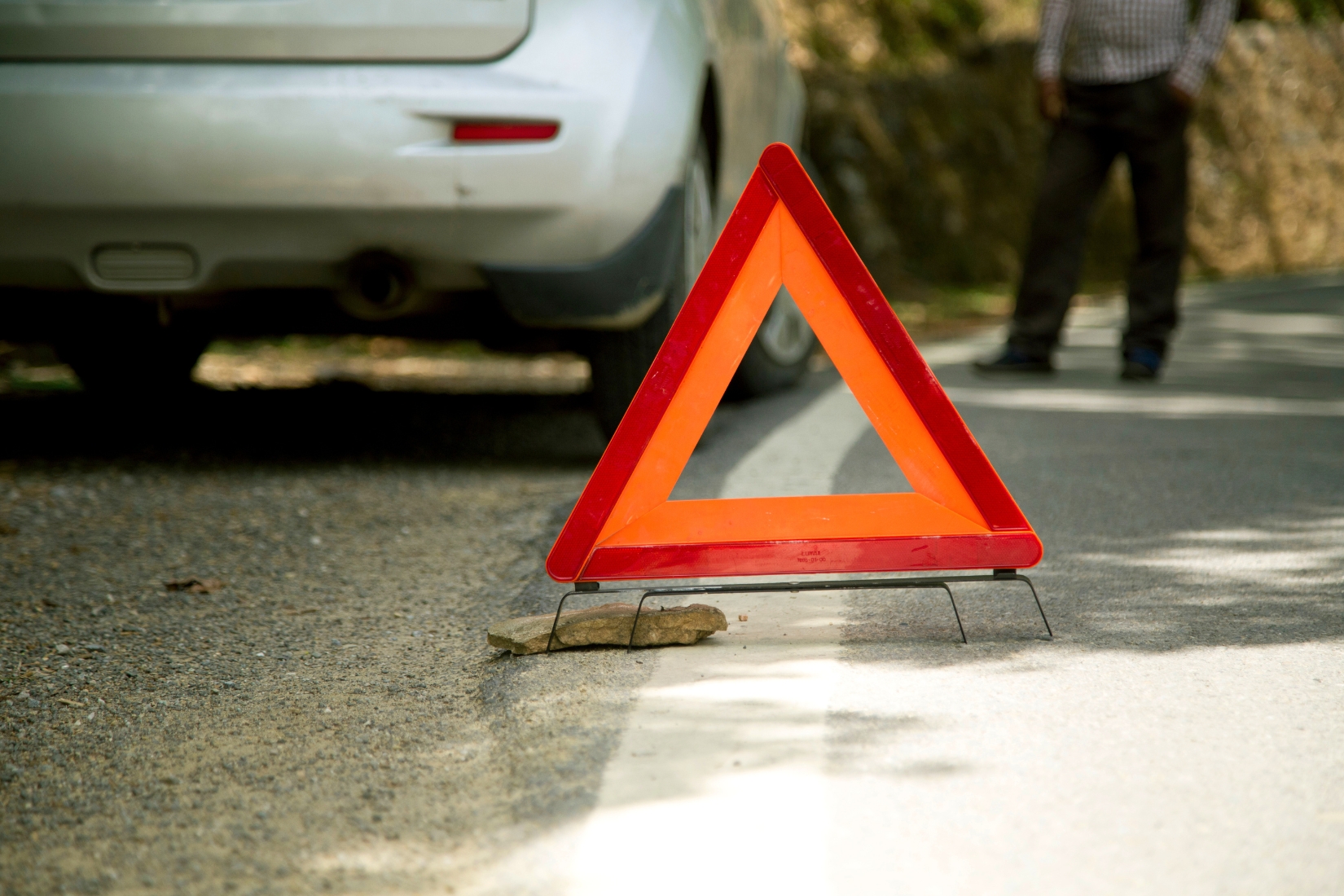
After parking, place your warning triangle on the road behind your vehicle. The general recommendation is to position it about 45 to 50 meters behind the car on a normal road, and further back if you are on an expressway where vehicles are traveling at higher speeds. If you have a reflective jacket, wear it before stepping out.
At night or during heavy rain, visibility drops significantly. In those conditions, your triangle and hazard lights are the difference between being seen and being invisible to a driver who suddenly has very little time to stop. Never assume you are obvious enough.
4. Try to Identify the Nature of the Problem
You do not need to be a mechanic to do a basic assessment. What you are looking for are clues, not a diagnosis.
Different symptoms usually point in different directions. An engine that overheats quickly suggests a cooling system issue, a blown hose, or low coolant. A car that simply refuses to start often points to a dead battery or fuel supply problem. A sudden loss of steering or unusual pulling suggests a tyre blowout or suspension failure. Smoke from the engine bay and smoke from underneath the car mean very different things.
Check your dashboard warning lights if they are still on. Note any unusual sounds you heard before the car stopped. Take a quick look under the car for fluid leaks without touching anything. If you smell burning or see visible smoke, stay away from the engine bay and do not attempt to open the bonnet.
All of this information becomes useful when you contact a technician. Instead of saying "my car just stopped," you can say "the temperature light came on, there's steam from the bonnet, and I noticed it was losing power for about five minutes before it stopped." That kind of detail helps a professional understand the problem before they even arrive, which means faster and more accurate assistance.
5. Avoid DIY Fixes Beyond Your Knowledge Level
The temptation to fix things yourself is real, especially when you are frustrated and in a hurry. But roadside repairs attempted without proper knowledge cause a notable share of the mechanical problems that end up costing drivers far more than the original breakdown would have.
Electrical faults look deceptively simple until you disconnect the wrong terminal and trigger a cascade of issues. Cooling system problems can scalp you with pressurized steam if you open the radiator cap too soon. Fuel-related issues carry fire risk. Even something as seemingly straightforward as jump-starting a car has caused battery explosions when done incorrectly.
What you can reasonably do yourself: check and change a flat tyre if you have the tools and know the process, check engine oil if the level is the suspected issue, and top up coolant if the engine has fully cooled down and you have the right type on hand.
Everything else, particularly if you are unsure, is better left to someone who works with these systems daily. A temporary fix that fails while driving is more dangerous than calling for help and waiting.
6. Contact the Right Professional Without Delay
This is where many drivers lose valuable time. Instead of calling a qualified mechanic or a roadside assistance service, the default response is often to call friends, relatives, or whoever picks up first, hoping someone knows something. The result is usually a string of calls, conflicting advice, and an hour or two wasted before anyone useful is reached.
When your vehicle breaks down, you need someone who can actually help, either by talking you through an assessment over the phone or by getting to your location. Speed matters here. Every extra minute you are stranded on the road is a safety risk.
When you call, give as much detail as possible. Your location, including nearby landmarks, what the car was doing before it stopped, what warning lights are on, and any visible signs like smoke or fluid leaks. A good technician will use this information to come prepared rather than arriving to discover they need equipment they left behind.
Keeping the number of a trusted mechanic or a vehicle assistance service saved in your phone before anything happens is one of the most practical decisions a car owner can make.
7. Stay Safe While Waiting for Assistance
Once help is on the way, your job is to wait without creating additional risk.
If you are on a highway or any road with fast-moving traffic, do not stand behind your car or between your car and the road. Move to the side away from traffic, ideally behind a barrier if one is available. If you have passengers, direct them away from the car as well and away from the road. Children especially should be moved well clear of the carriageway.
Keep your phone charged, or at least keep an eye on the battery. If your phone dies before the technician arrives and something changes about your location or the situation, you have no way to communicate. This is where a power bank in your car becomes genuinely useful.
Stay alert. Breakdowns sometimes attract opportunists, particularly in isolated areas or late at night. Keep your car doors locked, keep valuables out of plain sight, and trust your instincts if something feels off. You are not being paranoid; you are being sensible.
If it gets dark while you are waiting and your hazard lights are running low on battery, weigh whether to continue running them or preserve enough charge to start the car if the issue gets resolved. Your technician can advise when they are close to arriving.
Keep These Emergency Items in Your Vehicle
Knowing what to do during a breakdown is one side of the equation. Being prepared before it happens is the other.
A few basic items in your boot can change the experience entirely:
Reflective warning triangle: Non-negotiable. This is a legal requirement on Nigerian roads and a genuine safety tool.
Reflective jacket or vest: Cheap, light, and important after dark.
Charged power bank: Even a small one can keep your phone alive long enough to get help.
Basic tool kit: A wrench, pliers, screwdrivers, and a tyre pressure gauge cover most basic needs.
Spare tyre in good condition: Not just present, but properly inflated and with a working jack and wheel spanner.
Small torch: Useful for checking under the car at night without relying on your phone's flashlight.
Small bottle of engine coolant and engine oil: Particularly useful on long trips.
None of this requires major investment, but the combination of these items has turned what could have been hours-long ordeals into manageable situations for countless drivers.
How Wakafixam Can Help When You Need Assistance Fast
One of the most common frustrations during a vehicle breakdown is not the breakdown itself, it's the scramble to find someone reliable to help. Calling around, not knowing who to trust, getting vague estimates, and waiting with no update turns a stressful situation into an exhausting one.
Wakafixam addresses this. The platform connects vehicle owners with vetted service providers, allowing you to find qualified mechanics and roadside assistance professionals without the usual guesswork. You can check ratings, read reviews, and make an informed decision quickly, which is exactly what you need when you are on the side of a road and time matters.
Having access to a platform like Wakafixam before something goes wrong means you are not searching from scratch under pressure. Download the app, create your account, and save it. You may not need it for months, but when you do need it, that preparation will be worth more than most other things in your glove compartment.
Safety comes before repairs. A car can be fixed, a road accident caused by a poorly handled breakdown is a different kind of problem entirely.
Knowing these steps in advance means you are not trying to figure things out in the middle of a stressful situation. You already know. That knowledge, combined with the right preparation and the right contacts, is what gets you back on the road with as little downtime as possible.