7 Signs Your House Has a Hidden Water Leak and How to Stop It
A hidden water leak can go unnoticed for weeks before it becomes a serious problem.
Because the leak is often behind a wall, under a floor, or around a pipe connection, many people only notice it after visible damage starts to appear. By that time, what could have been a simple repair may already be affecting paint, flooring, or fittings inside the home.
Fortunately, most water leak issue show warning signs early. Knowing what those signs look like can help you deal with the problem before it becomes more expensive to fix.
1. You Keep Pumping Water More Often Than Before
Your overhead tank should last a predictable amount of time based on how many people are in the house and how water is used day to day. When that pattern suddenly changes, when the tank is running dry faster than it normally would, and nobody has changed their habits, something else is responsible for the difference.
For many households, this is the first real sign that a leak is somewhere in the system. The water goes in at the top and disappears faster than it should. You pump when NEPA brings light. You pump again when the generator comes on. And somehow, despite all of that, the tank never seems to stay full for long.
The easy assumption is that someone in the house is using more water. But when you pay attention and realise usage has not actually increased, no extra laundry, no guests, no obvious reason, that gap between what you are pumping and what you are getting out of it points to water leaving the system somewhere it should not be. It is going into your walls, beneath your floor, or along a pipe joint that has quietly started to give way.
2. Patches and Stains on Your Walls and Ceilings
Walls and ceilings are not supposed to change colour on their own.
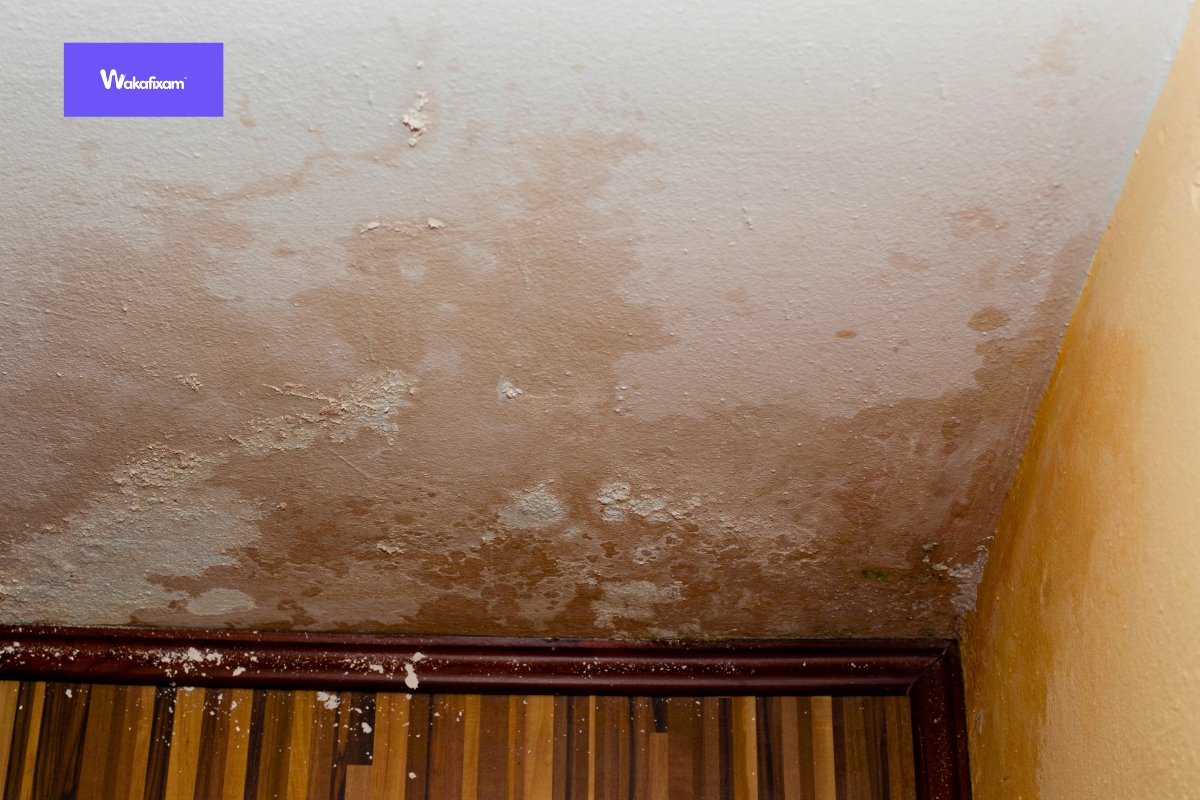
When you notice a yellowish patch spreading across a ceiling, or a section of paint that has started to bubble and peel away from the wall, moisture is almost certainly behind it. Water from a leaking pipe seeps into the surrounding material (plaster, concrete, or drywall) and that moisture works its way outward until it becomes visible on the surface.
These patches are often mistaken for poor painting work or surface dampness from weather. The difference is that surface dampness tends to dry and disappear. A stain caused by a leak will keep spreading, darken over time, and may feel slightly soft or wet to the touch. In ceiling cases especially, the affected area can eventually become structurally weak enough to crack or collapse if left unattended.
3. Stale, Musty Smell That Won't Go Away - No Matter What You Do
Some leaks make themselves known not through what you see, but through what you smell.
A damp, stale odour that lingers in a room, even after cleaning, even after ventilation, usually means moisture is sitting somewhere it should not be. The smell comes from organic material breaking down in a wet environment: wood, plaster, dust, and the beginnings of mold growth all contribute to that distinctive closed-up, slightly sour scent.
Pay attention to enclosed spaces in particular. The area under your kitchen sink, the back corners of your bathroom, built-in wardrobes against external walls, these are spots where a small leak can go unnoticed for a long time while the moisture quietly accumulates. If a smell persists in any of these areas despite cleaning, the source is likely behind the surface, not on it.
4. A Noticeable Drop in Water Pressure
If your shower or tap suddenly feels weaker than it used to, or if the pressure fluctuates unpredictably, that change in flow deserves attention.
Water pressure drops can happen for reasons outside your home, but when the issue is consistent and limited to your property, it often points to a leak within your own plumbing. When water escapes through a crack or a loose joint somewhere along the pipe, less of it reaches the outlets you are using. The tap still runs, the shower still works, but neither performs the way it should.
The distinction to make here is whether the pressure drop affects your whole street or just your building. If neighbours have no complaints and the supply authority has reported no issues, the problem is most likely sitting inside your walls.
5. The Sound of Running Water When Everything Is Off
This one is easy to dismiss, and that is exactly why it is worth taking seriously.
At some point, probably late at night or during a quiet afternoon, you may hear something that sounds like flowing water, a soft hiss, or an intermittent dripping from inside a wall or beneath the floor. Every tap is off. The washing machine is not running. The toilet has not been flushed recently. And yet the sound continues.
What you are hearing is water moving through a pipe that has failed at some point along its length. The sound is more obvious at night because the rest of the house is quieter, but it has likely been there for longer than you realise. Rather than dismissing it as the building settling or pipes cooling down, treat it as a starting point for investigation.
6. Mold Appearing in Unexpected Places
Mold is not simply a cleaning problem. It is a moisture problem.
When dark spots begin appearing along the base of a wall, in the corner of a room, or behind furniture that sits against an interior wall, mold is telling you that the environment behind that surface has been consistently wet for long enough to support its growth. Its presence means the moisture has been there for some time.
Beyond the structural implications, mold poses real health concerns. Extended exposure can irritate the respiratory system, trigger persistent coughing and sneezing, and worsen conditions like asthma. Children and elderly members of the household are especially vulnerable. Scrubbing mold off a wall surface and repainting over it will not solve the problem if a leaking pipe is the source, it will grow back.
7. Wet Patches, Soft Spots, or Loose Tiles on the Floor
Your floor should feel firm and dry underfoot, everywhere, all the time.
If a section of floor feels slightly spongy, if tiles in a particular area have become loose without any physical impact, or if a patch of floor covering feels damp to the touch, water is almost certainly rising from below. Pipes that run beneath flooring, common in bathrooms, kitchens, and utility areas, can develop faults that allow water to saturate the material above them over time.
Left unaddressed, this kind of damage does not stay contained. It spreads outward, weakens the structural base of the floor, and eventually leads to tile cracking, wooden floors warping, and in severe cases, complete floor replacement. What could have been fixed with a pipe repair becomes a full renovation.
Bonus: Your Water Bill Is Climbing With No Clear Reason
Although this is coming in as a bonus point, but one of the The first place a hidden leak often shows up is not on your wall, it is on your bill.
When your water usage stays the same but your bill keeps rising month after month, something is consuming water without your knowledge. It does not take a large leak to add up. A small drip from a pressurized pipe can waste hundreds of litres over just a few days.
Pull out your last three or four water bills and compare them side by side. If the numbers are creeping upward and nothing has changed in your household, no new appliances, no increase in the number of people using water, that pattern is a signal worth investigating. The water is going somewhere, even if you cannot see where.
How to Stop a Hidden Water Leak
Identifying the signs is only the first step. What you do next determines how much damage you end up dealing with.
Check the obvious places first. Look under sinks, behind the toilet, around your washing machine connections, and anywhere a pipe is visible. Sometimes what feels like a hidden leak has a straightforward access point that just needs a closer look.
Do not wait for it to get worse. Once you have identified a sign, the time to act is immediately, not after the next round of bills arrives or after you have repainted the wall. Every week of delay adds to the cost of repair.
Shut off the water supply if necessary. If you suspect an active leak and cannot identify it, closing the main supply valve stops further damage while you arrange for proper assessment.
Get professional detection and repair. Hidden leaks inside walls or beneath floors require specialised equipment to locate accurately. Attempting to break into walls based on guesswork often creates more damage than it resolves. A qualified plumber with leak detection experience can identify the exact location before any surface is disturbed.
Find a Reliable Plumber Faster with Wakafixam
One of the most frustrating parts of dealing with a water leak is the delay that comes with finding someone who can actually fix it, someone available, nearby, and qualified.
Wakafixam removes that frustration. Post your issue on the platform, describe what you are dealing with, and you will receive responses from verified plumbers in your area. Instead of calling around through referrals or waiting on a single contact who may not be available, you get multiple options quickly and can choose based on availability, proximity, and pricing.
When a leak is active, speed matters. The faster a qualified professional can assess and fix the problem, the less damage makes its way into your walls, floors, and eventually your budget. Wakafixam is built for exactly that kind of urgency.
Hidden water leaks do not announce themselves, and they do not stop on their own. But they do leave traces - in your bills, on your walls, in the smell of a room, beneath your feet. The signs are there if you are paying attention.
Acting on early warnings is always cheaper than managing the aftermath. A stained ceiling addressed today is a pipe repair. The same stain ignored for three months can become a ceiling replacement, a wall reconstruction, and a mold remediation job — all at once.
Check your home now. If anything in this article sounds familiar, do not file it away as something to look into later. Look into it today.